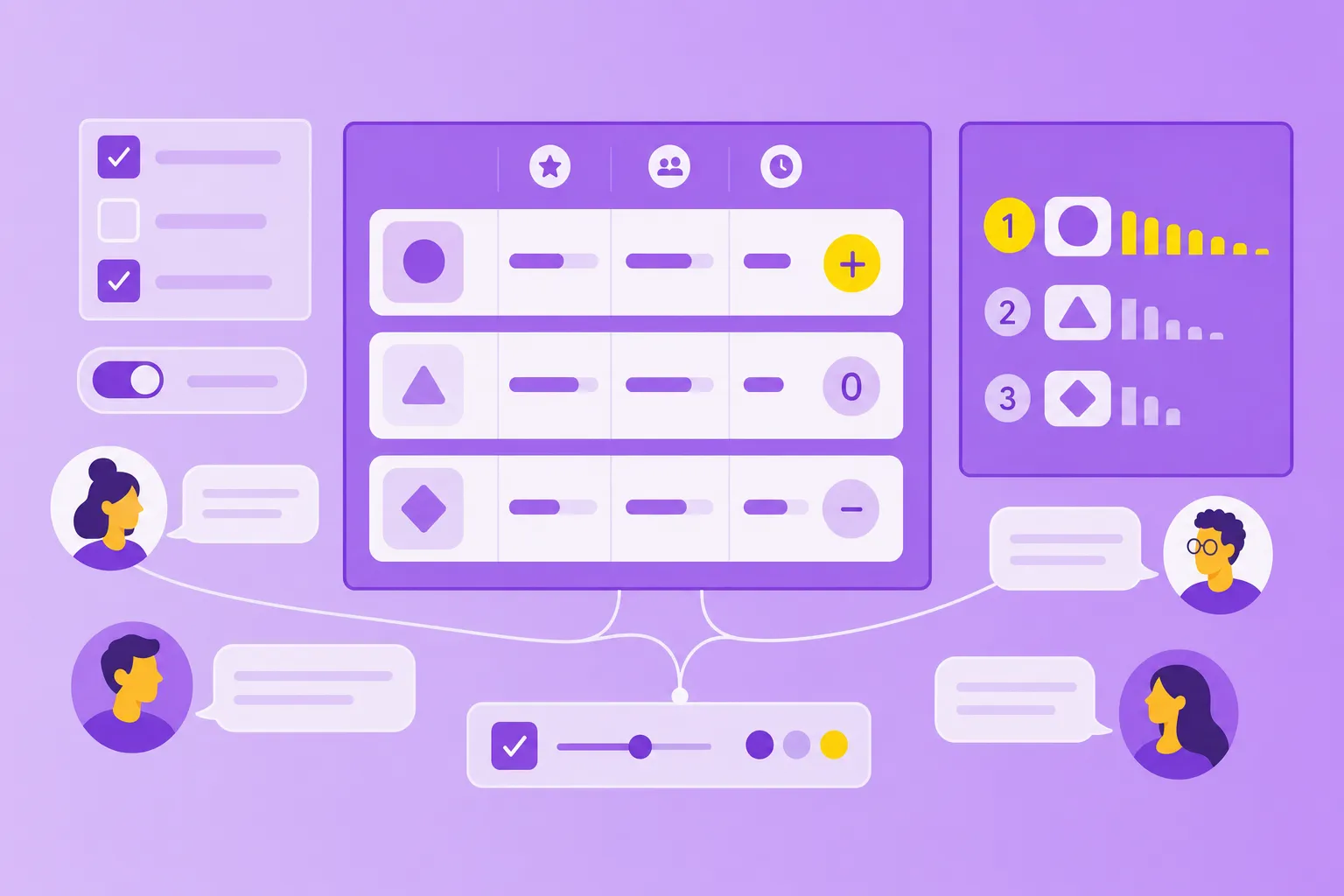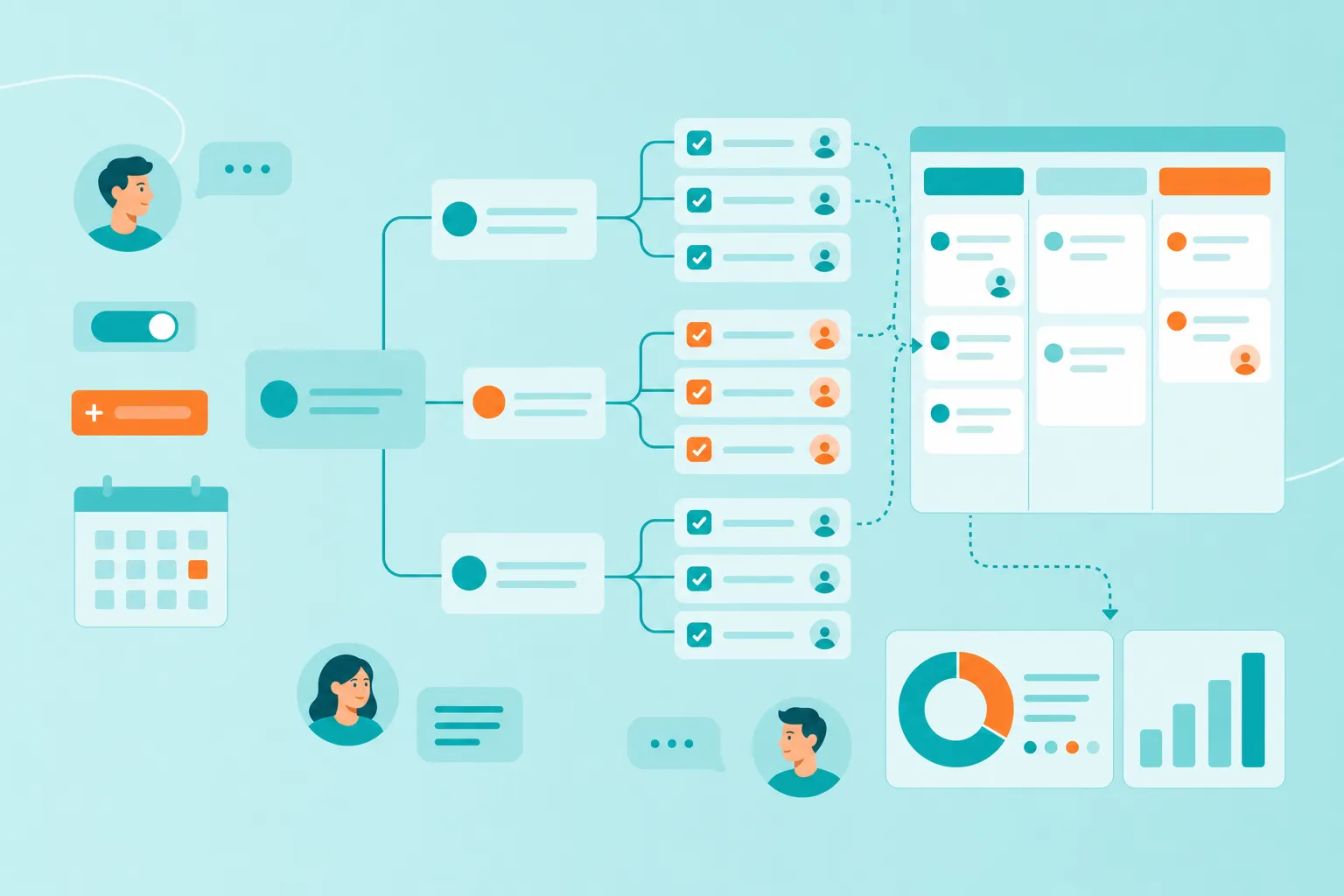
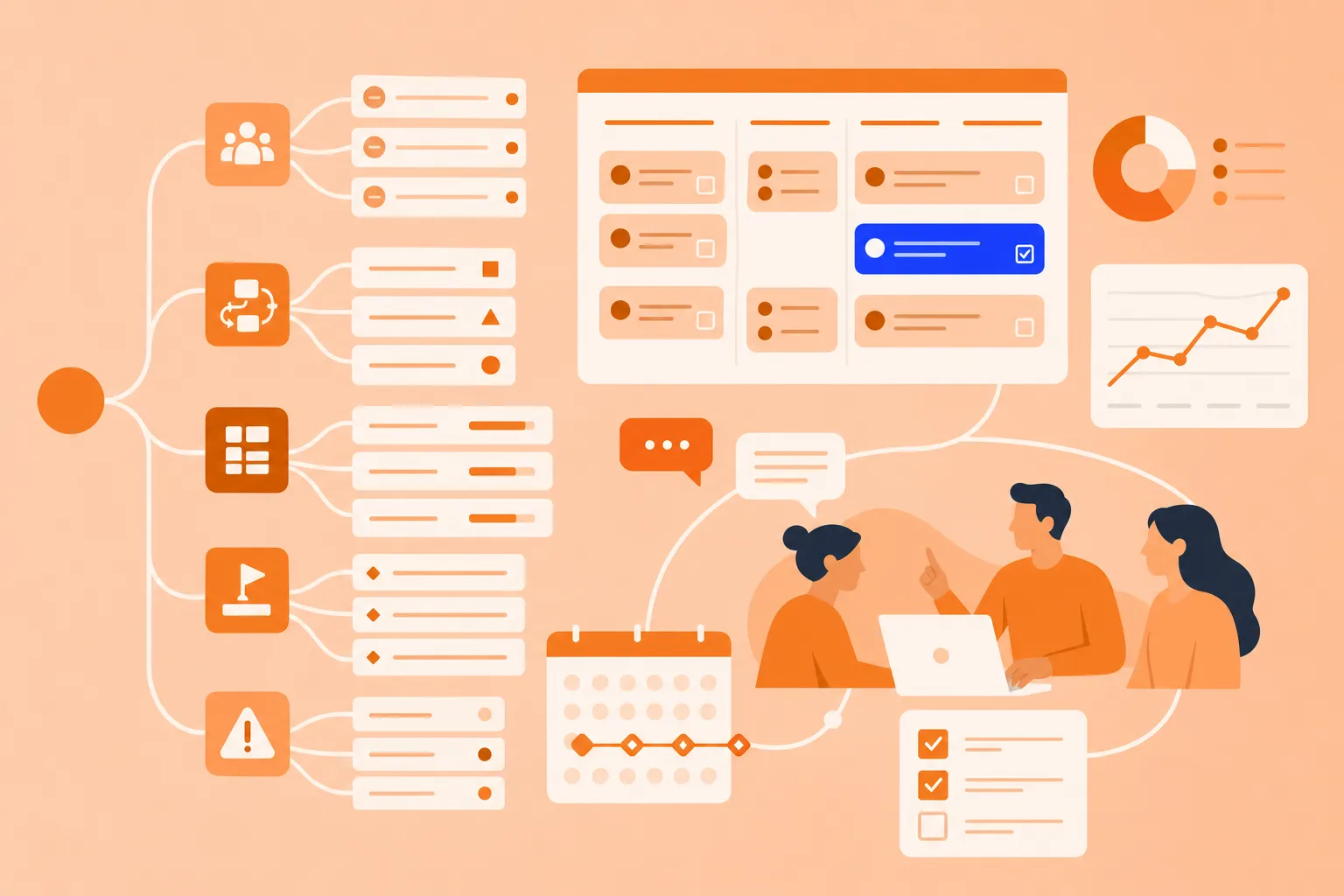

Agile transformation is the process of shifting an entire organization from traditional, top-down ways of working to iterative, cross-functional and customer-focused ones. Tools like MindMeister let you plan the transformation visually in one shared mind map, so every leader sees the goal, the scope, the milestones and the risks in a single, always-current view.
What agile transformation is and why it is hard
Agile transformation is the process of shifting an organization from traditional ways of working to iterative, cross-functional and customer-focused ones. Traditional work relies on hierarchical decision-making, fixed project plans and siloed teams. An agile transformation changes several things at once. It reshapes team structures, planning rhythms, decision-making authority, success metrics and leadership behaviors. Teams move from managers assigning tasks to small groups owning outcomes. Planning shifts from a yearly cycle to short, repeating loops. Consulting firms like McKinsey describe this as change across strategy, structure, people, process and technology. In short, almost every part of how the organization operates has to move.
This is why agile transformation is hard. It is not a software rollout. People have to change how they work, communicate and measure success. The tools and frameworks are the easy part. The hard part is behavioral and cultural change, and that takes months, not weeks. Many transformations still fail, usually because leaders underestimate the organizational change management involved. Be honest with yourself about the scale before you start. The teams that plan for that reality tend to hold their nerve when progress feels slow.
In practice, the shift feels different week to week. Early on, teams spend more time in workshops and alignment meetings than in delivery. That feels slow, and some leaders mistake it for lost productivity. It is not. The investment in shared understanding is what prevents the rework and confusion that derail transformations later. After the first few sprints land, the rhythm starts to feel natural. Decisions move faster because the right people already sit in the room. Cross-functional teams stop waiting for approvals that used to take days. The visible progress also builds the credibility the transformation needs to survive its first budget review. Without early wins to point to, sponsors lose patience and pull funding. Keep the mind map updated after every sprint review so it always shows the current state, not the launch-day fantasy. When people can see progress on the mind map, they stop asking for status reports and start trusting the process.
How to plan an agile transformation with a mind map in MindMeister
Here is how to plan an agile transformation as a mid-sized marketing or operations department. Use one mind map, the same way you would for visual project planning, and build it out step by step. The goal is a single picture that shows what changes, who owns each change and when it happens. Follow the 5 steps below in order, and keep the whole mind map in view as you work.
1. Put the transformation goal in the central node
Start with a clear, specific goal at the center of your mind map. Vague goals like "become more agile" give teams nothing to aim at. Write something concrete and time-bound instead, such as "Move all product teams to two-week sprints by Q2." A sharp central node keeps every branch that follows tied to a real outcome. It also gives leaders one sentence they can repeat and rally around. When people disagree later, you can point back to this goal to settle the debate.
Think of the central node as the promise you are making to the organization. Every leader who opens the mind map should understand the destination in seconds. If the goal shifts later, change it here first so the whole mind map stays honest.
2. Add four main branches for the transformation scope
Add 4 main branches off the central node: Teams, Processes, Tools and Stakeholders. Under Teams, list which teams transform and in what sequence. Under Processes, note which planning, reporting and decision-making processes change. Under Tools, name the software each team adopts. This is where MeisterTask fits, since it is the execution tool for running sprints and boards. You might replace a shared spreadsheet with a proper agile board, for instance. Under Stakeholders, list who needs to be aligned, informed and bought in. Keep the roles clear as you build: MindMeister maps and communicates the plan, but it does not run sprints, manage backlogs or track velocity. For that execution work, MeisterTask is the right tool.
3. Break each branch into changes, owners and timelines
Now expand each branch into detail. For every item, add 3 sub-branches: the specific change, the person or team responsible and the timeline. For example, under Teams you might add "content team moves to sprints," owned by the content lead and targeted for March. Under Processes you might add "monthly reporting moves to sprint reviews," owned by the operations lead. This turns a broad ambition into a set of owned, dated commitments. When every change has a name and a date next to it, accountability becomes obvious to everyone looking at the mind map.
Color-code the owners if that helps you spot gaps. If one person owns changes across 3 branches with the same deadline, you have found a bottleneck. Fix the workload before it stalls the whole plan.
4. Add a milestones branch
Add a milestones branch to track progress against real checkpoints. Good early milestones include the first team trained, the first sprint completed, the first retrospective held and the first cross-team dependency mapped. These are concrete signals that the transformation is moving, not just planned. They also help you spot a stall early, before it drags on for months. Milestones also give leaders something to celebrate, which keeps momentum up during a long change. You can reuse project planning templates for transformation milestones to structure these checkpoints quickly.
Keep milestones outcome-based rather than activity-based. "First sprint completed" tells you more than "sprint training scheduled." Review the milestones branch at every steering meeting so progress stays visible to everyone.
5. Add a risks branch
Add a final branch for risks, because every transformation has likely failure points. For each risk, add a sub-branch with the risk itself and a mitigation plan. You might note that leadership could revert to annual planning, then plan quarterly reviews to counter it. Naming risks early makes them easier to manage later. Once the mind map is complete, share it with all leaders. Use it as the live reference for every steering meeting, and update it as the transformation moves.
Common risks include leadership reverting to old habits, teams losing time to unclear roles and stakeholders withdrawing support. Name the person who owns each mitigation. A risk with no owner is a risk you are quietly ignoring.
Stakeholder communication is the part most teams underestimate. A transformation touches reporting lines, incentive structures, vendor contracts and hiring profiles. People across the organization need to understand what is changing and why, not just the teams doing the work. A single, shared mind map becomes the reference point for those conversations, because it shows the full picture without requiring a slide deck or a 20-page document. Update it after every steering meeting so it always reflects reality, not the original plan. Leaders who skip this step find out the hard way: a transformation that looks successful inside the pilot team can still fail if the rest of the organization never bought in.
Three common reasons agile transformations fail
The first reason is that leadership does not change how it works. Teams adopt sprints and standups, but leaders still demand fixed annual plans. They keep measuring headcount instead of outcomes. The transformation stalls because the system around the teams never moves. Agile ways of working cannot survive inside a rigid management structure that pulls in the opposite direction. Leaders set the tone for everyone below them. If they keep planning a year ahead and rewarding activity, teams learn that the old rules still apply. Real change starts when leaders adopt shorter cycles and judge work by results.
The second reason is that processes are never redesigned. Teams run sprints, yet a decision over a set budget threshold still takes 6 weeks to approve. The agile ceremony becomes theater. People go through the motions of standups and retrospectives, but the old approval chain still controls the real work. Speed on paper means nothing when a single sign-off freezes progress for weeks. Frustrated teams eventually revert to the way things were before. To make agile stick, redesign the processes that surround the teams, not just the rituals inside them.
The third reason is that organizations measure activity instead of outcomes. Leaders count story points and velocity rather than asking whether customers get better products faster. These metrics reinforce the old way of thinking, even as teams adopt the new vocabulary. People optimize for whatever gets measured, so they chase output rather than value. If your measures of success do not change, your results will not change either.
Track customer outcomes, cycle time and quality, and let those numbers steer the transformation.
These three failures share a root cause: the organization treats the transformation as a project with an end date rather than a permanent shift in how it operates. A project mindset leads to shortcuts, because people assume they can revert if things get uncomfortable. A transformation mindset accepts that discomfort is part of the journey and builds support structures, coaching, retrospectives and visible milestones, to help people through it.
Agile transformation vs agile adoption: the difference
Agile adoption and agile transformation are not the same thing. Agile adoption means individual teams or departments start using agile practices like standups, sprints and retrospectives. Agile transformation means the whole organization changes how it works. Strategy, budgeting, hiring, performance management and leadership all shift to support agile ways of working. Most organizations start with adoption and then discover the practices do not stick without transformation. Adoption is a sensible first step, and it often proves the value of agile on a small scale. The trouble comes when the wider organization stays the same and quietly cancels out the gains.
The size of your mind map reflects that difference. A mind map at the adoption stage covers one team's practices. A mind map at the transformation stage covers the whole organization's change journey. If your teams already run standups and sprints, your next step is running agile Scrum ceremonies with mind maps to keep them sharp. If you are ready to plan the wider shift, open a blank MindMeister mind map and follow the planning structure from the section above. Start with your goal at the center, add the 4 scope branches and invite your fellow leaders in. A shared mind map turns a vague ambition into a plan everyone can see, question and own.
Map your agile transformation in MindMeister